
Closely watched by the world for any escalation, the Iran-Israel conflict is already showing early signs of stress for India Inc - longer deliveries, doubling freight rates, extended working capital cycles, and higher costs. For those yet to feel the heat, there is growing apprehension and nervousness over future developments, observed industry executives.

A study of 435 companies listed on the Bombay Stock Exchange, which provide their capital-employed data on a quarterly basis, shows capex grew by a meagre 3.4 per cent in the nine months ending December 2009, compared to the level in March 2009.

India Inc is rearranging its investment itinerary with little known investment destinations like Bihar, Assam, West Bengal and Orissa gaining a place on the country's economic roadmap.

Corporate India is embarking on an ambitious investment drive, with capital expenditure (capex) expected to double to $850 billion over the next five years, according to a report by S&P Global Ratings. Indian power & transmission, airlines, and green hydrogen sectors would spearhead the spending, the report said.

A sharp hike in global commodity prices meant that India Inc's raw material costs rose 38 per cent and, since they constitute 41 per cent of sales revenues, this lowered profits growth to 35 per cent (from 62 per cent in Q3).
Recession-hit India Inc may not have done well in terms of Profit After Tax (PAT) growth in the previous fiscal, but FY 10 could see it clocking a robust over 77 per cent growth in PAT, an economic think-tank forecast in its latest report.
Mamata-wary corporate heads hope economics wins over politics in Budget.

Employers in India are planning to outpace global adoption in certain future technologies as companies operating in the country are heavily investing in technologies like artificial intelligence (AI), energy technologies, robotics, and autonomous systems, said the World Economic Forum (WEF) in its latest "Future of Jobs" report released on Wednesday. The report, released days before the WEF annual meeting in Davos from January 20-25, notes that 35 per cent employers in India think that adopting semiconductors and computing technologies (compared to 20 per cent globally) will transform their operations while 21 per cent employers think that adopting quantum and encryption technologies (compared to 12 per cent globally) will also transform their operations.
With the government considering a new Bill to make the Indian Institutes of Management answerable to Parliament, India Inc leaders say the time has now come to grant complete autonomy to these institutes.
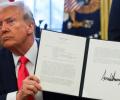
Industry insiders in India warn that any such move in the pharmaceutical sector could be counterproductive for the US as it may face increased drug shortages if tariffs are imposed on such imports.
There have been several, high-profile name changes in 2007 and interestingly, many of these have been corporate rebrandings, rather than consumer product name changes.

Bharti Airtel Chairman Sunil Bharti Mittal said India has lost one of the finest political leaders and a legal luminary.

Industry body Assocham said the focus continues to be on rising inflation and not on the country's economic growth.
The lower sales growth rate is on account of single-digit growth in sales by Reliance Industries (6.3 per cent), Reliance Energy (9.53 per cent), Hero Honda (5.48 per cent) and Biocon (7.52 per cent). Companies that posted a decline in sales included two-wheeler giant Bajaj Auto (- 3.03 per cent), pharmaceutical major Ranbaxy (-4.79 per cent) and Madras Aluminium (-11.13 per cent).
India Inc's net profit as a percentage of the country's gross domestic product (GDP) is just shy of reaching 5 per cent, bolstered by strong earnings growth in the second quarter of 2023-24. Analysts interpret this as an indication that a corporate profit upcycle is in progress, with projections suggesting that this share could exceed 8 per cent within the next five years, driven by bullish earnings growth expectations. "We believe we are only halfway through a profit cycle, with the profit share in GDP rising from a low of 2 per cent in 2020 to about 5 per cent currently, and likely heading to 8 per cent in the coming four to five years. "This implies about 20 per cent compounding of earnings growth. "Underscoring this forecast is the start of a new private capex cycle, under-geared balance sheets, a healthy banking system, lower corporate tax rates, improving terms of trade, and structural consumption demand outlook albeit somewhat offset by likely consolidation in government deficit," said Ridham Desai, managing director, head of research, Morgan Stanley India in a note.
Work-related stress can impact one's mental health. Which is why Saurabh Tiwari says he's fortunate that his company understands this and is doing whatever it can to help mitigate that stress. "My company provides opportunities according to my interest, and if anyone is feeling stressed or has additional workload, they can talk with their supervisor to resolve it," says the 31-year-old who's working from home for a Bengaluru-based IT firm. Not everyone's as lucky.

RBI moves will further add to corporate woes. Harsh Mariwala, the president of industry body Ficci, said, "I am afraid that with such a hawkish monetary stand, the investment environment would become even more difficult. Growth and employment targets will certainly not be achieved."
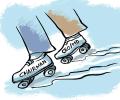
If India Inc sincerely feels the separation of posts is not a good governance measure, it must spell out its doubts clearly to Sebi and give cogent arguments rather than mundane ones like India is different, argues J N Gupta, member, Kotak committee on corporate governance reforms.
India Inc has learnt to take risks and compete with global players to create wealth, industry experts said on Monday.

Paras Defence and Space Technologies partners with Northstar Aviation to provide air-to-air refuelling technologies and support services to the Indian armed forces, enhancing mission endurance and operational flexibility.
We are already seeing pressure of inflation, we also seeing slowdown in manufacturing, hope excise rates are not increased because that will get passed to the consumer.
Rahul Gandhi spoke about his vision of empowering women and giving voice to the people of billion-strong nation.
India Inc's love affair with the health care business has just begun to blossom.
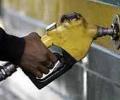
India Inc has said the decision to hike in diesel price was "inevitable" and this would help in fiscal consolidation.
"Namaste...Saal Mubarak...Diyas (Dipawali lights)... Diwali... Mumbaikars and Dharavi" were some of the expressions and words that Obama used in his interaction with a select group of leading industrialists.
